How We Produce – In the Service of Naturalness and the Future
Responsible Pond Farming and Natural Fish Rearing
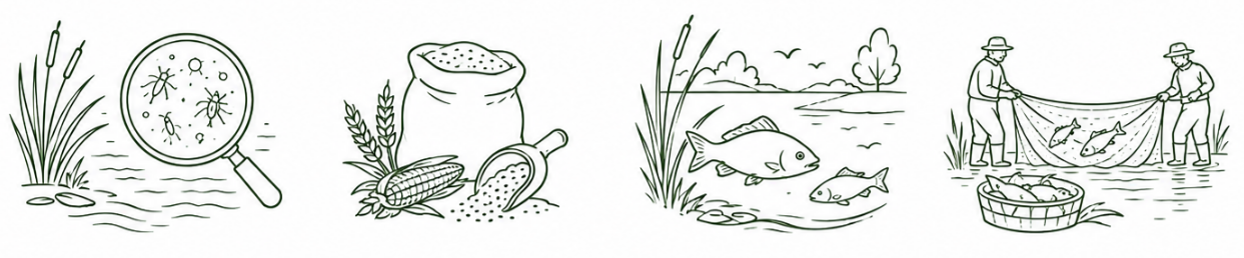
- 100% natural food base: We supplement the plankton population — the fish's primary food source — exclusively with natural manure sourced from local farmers; we use no artificial fertilizer whatsoever.
- Reliable, local feeding: We source the grain used for supplementary feeding exclusively from reliable local producers, supporting a short supply chain and guaranteed quality.
- Extensive, gentle farming: Our extensive technology, based on controlled population density and natural growth, provides an undisturbed, stress-free environment for the fish and the aquatic ecosystem.
- Traditional harvesting technology: In line with our pond farming technology, every year we harvest the ponds by fully draining them, which ensures the natural renewal of the pond bed and controlled fish health management.
Water Retention, Climate Adaptation, and Biodiversity
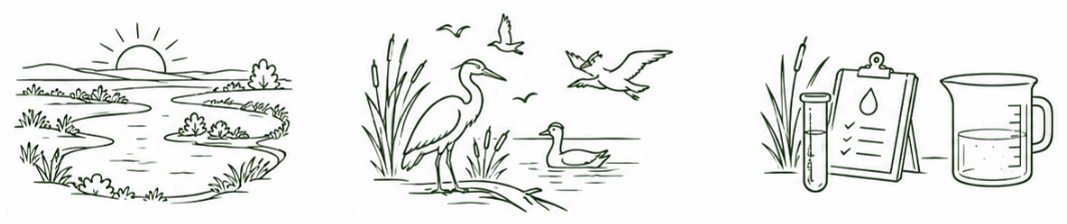
- Artificially maintained oases: In times of climate change and warming, our fish ponds represent essential wetland habitats in drought-affected areas.
- A refuge for migratory birds: Our ponds provide protected resting, nesting, and feeding grounds for migratory waterfowl species and the rich local wildlife.
- Strict water quality monitoring: We regularly test the condition and quality of the water, guaranteeing a clean living space and a healthy fish stock.
Preserving the Local Community and Rural Values
- Short supply chain and local cooperation: We purchase both grain and manure from farmers in the surrounding area, so our farm strengthens local rural development and the local producer community.
- Traditional Hungarian fishing culture: With our pond farming model built on natural conditions, we carry forward the values of sustainable, traditional domestic fishing.
- Raising awareness and sharing knowledge with future generations: Environmental education for children is one of our key goals. We want to show them, directly and in a natural setting, sustainable fishing, how wetland habitats function, and respect for nature.
Why Should We Eat More Fish?
Fish doesn't only belong on the table on holidays.
A light yet valuable source of protein
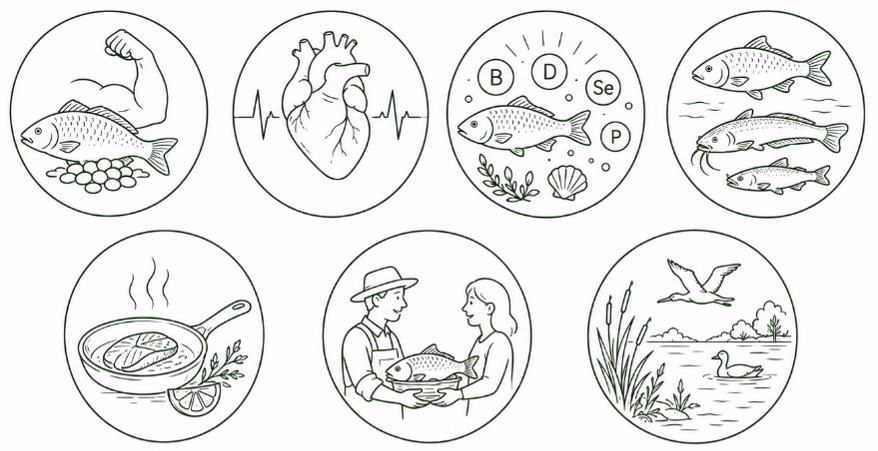
Fish meat is a complete source of protein: it provides essential amino acids that our bodies cannot produce on their own. It is easily digestible, so a well-prepared fish dish can be hearty and filling without necessarily being a heavy meal.
More fish, a more varied diet
One of the fundamentals of healthy eating is variety. Not every meat-based meal has to consist of pork, beef, or poultry. If fish makes its way onto the plate from time to time, we add another valuable source of protein and make our diet more varied.
Valuable nutrients from a natural source
Fish can provide not only protein but also many important micronutrients. Depending on the species, they may contain B vitamins, vitamin D, selenium, phosphorus, and valuable fatty acids, among others.
Not all fish are the same – and that's exactly what makes it good
Different fish species vary in taste, texture, and fat content. This makes fish a much more versatile ingredient than one might first think.
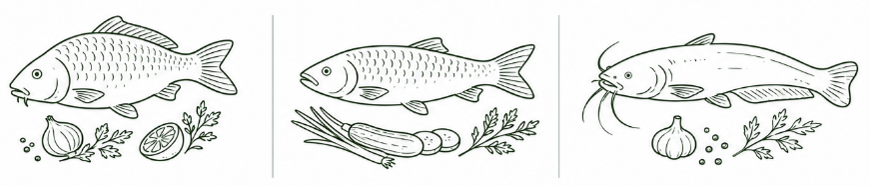
Carp – more distinctive, full-flavored, one of the traditional fish of Hungarian cuisine. It's not just for fisherman's soup and breaded carp: it's also worth discovering baked, grilled, and as an ingredient in modern dishes.
Grass carp – pleasant-tasting, firmer-fleshed fish that offers a completely different culinary experience from carp. It can also be a good choice for those who want to get to know freshwater fish better.
Catfish – with its soft, pleasant texture, this is a fish that is easy for many people to grow fond of. It can be prepared in many ways, making it a good "entry point" for those who rarely eat fish.
Fish isn't just Christmas fisherman's soup
One of the biggest misconceptions about domestic fish consumption is that preparing fish is complicated and time-consuming. Yet a simple weekday dinner can be quickly made from a good-quality fish fillet.
Pan-fried, grilled, oven-baked with vegetables and herbs, or even as an ingredient in light fish dishes, it holds its own.
When you choose domestic fish, you support domestic producers
When fish from a domestic pond farm reaches the table, we're not just choosing a food item. We're also supporting a production culture that has been part of the Hungarian countryside for centuries.
The journey of locally raised fish from producer to buyer can be shorter and more transparent: we can know where it comes from, how it was raised, and who stands behind it.
And a fish pond is far more than just a "fish production area"
Traditional pond farms also represent artificially maintained wetland habitats. The ponds can provide feeding, resting, or living space for birds, amphibians, and many other creatures.
So when we choose fish from a domestic pond farm, we can also contribute to the survival of a form of farming that lives in close harmony with wetland habitats.
Carp, grass carp, or catfish – three different characters, countless ways to prepare them.